How Smaller Elderly Care Settings Improve Safety, Supervision, and Assistance
Business Name: BeeHive Homes Assisted Living
Address: 2395 H Rd, Grand Junction, CO 81505
Phone: (970) 628-3330
BeeHive Homes Assisted Living
At BeeHive Homes Assisted Living in Grand Junction, CO, we offer senior living and memory care services. Our residents enjoy an intimate facility with a team of expert caregivers who provide personalized care and support that enhances their lives. We focus on keeping residents as independent as possible, while meeting each individuals changing care needs, and host events and activities designed to meet their unique abilities and interests. We also specialize in memory care and respite care services. At BeeHive Homes, our care model is helping to reshape the expectations for senior care. Contact us today to learn more about our senior living home!
2395 H Rd, Grand Junction, CO 81505
Business Hours
Most families start exploring senior care after a scare: a fall at home, a medication mix‑up, a wandering occurrence, or a gradual decline that all of a sudden becomes difficult to overlook. In those moments, the world of assisted living and elderly care can feel like an alphabet soup of choices and sales language. Buried in the information is one element that silently shapes nearly everything about a resident's life: the size of the care setting.
Having worked with older adults in both big neighborhoods and small residential homes, I have seen the distinction that scale makes. Bigger is not immediately worse, and smaller is not automatically much better. However when the concern is safety, close guidance, and really personalized support, attentively run smaller settings have some structural advantages that are difficult to reproduce in a big structure with a hundred residents.
This does not indicate everybody should rush toward the tiniest home they can discover. It means households should comprehend how size affects care, what trade‑offs are included, and how to inform a well run small environment from one that just calls itself "relaxing".
What "small" really implies in elderly care
People use the term "small" to explain whatever from a 20‑apartment assisted living wing to a four‑bed residential care home. To understand the effect on safety and supervision, it helps to draw some rough lines.
In many areas, senior care settings fall under 3 broad groups:
- Large neighborhoods: normally 60 to 200 citizens, often with numerous floorings, dining spaces, and activity spaces.
- Mid sized centers: roughly 20 to 60 residents, typically a single building or wing, sometimes part of a larger campus.
- Small residential settings: usually 3 to 16 locals, frequently licensed as adult household homes, board‑and‑care, residential care homes, or comparable names depending upon the state or country.
The labels vary by jurisdiction, but the lived experience in a 10‑resident home is extremely various from that in a 120‑resident facility.
In a big assisted living community, the benefits normally center on facilities: restaurant‑style dining, regular activities, on‑site therapy, transport, and a sense of a "town" under one roofing system. The trade‑off is that personnel must cover a lot of ground. A caretaker might be accountable for 12 to 18 locals during a shift, in some cases more, often scattered throughout a long corridor or numerous wings.
In a really small elderly care home, there may be 1 or 2 caregivers for 6 to 10 homeowners, all within line of vision or simply a brief hallway away. There is normally one kitchen, one primary living area, and bed rooms nestled carefully around them. What you quit in shiny features, you get in distance. That distance is what equates into security and supervision.
Why physical scale shapes safety
When we speak about "security" in senior care, we are truly discussing specific threats: falls, roaming and exit‑seeking, medication mistakes, choking and goal, delayed action in emergency situations, and undetected modifications in health status. Size influences each of these, often in subtle ways.
In a smaller setting, personnel can actually hear more. A chair scraping on tile, a closet door opening, a resident muttering in the hallway at 3 a.m. These small sounds often precede an incident. In a big building with long corridors, heavy fire doors, and mechanical noise, those early hints are easy to miss.
One afternoon in a 9‑bed home, a caregiver I worked with stopped briefly mid‑conversation and stated, "That is not her normal cough." She walked down the hall, examined a resident, and found that she had started aspirating on a sip of water. Quick intervention, immediate call to the doctor, health center visit, and the resident recuperated. Would that have been captured as quickly in a dining room with 70 individuals discussing clattering dishes? Perhaps, but less likely.
Smaller environments also decrease the range in between threat and action. If a resident stands up unsteadily, a caregiver 3 actions away can provide an arm. In a big facility, a resident may walk a surprising range before anyone notifications, specifically if staffing ratios are extended at specific times of day.
None of this indicates large communities can not be safe. Numerous are, and they frequently have more cameras, nurse protection, and safety innovation. But innovation hardly ever compensates for the simple truth that in a smaller space, it is harder for an issue to remain hidden for long.
Staff visibility and supervision
Supervision is not practically enjoying people; it has to do with knowing them well enough to discover change. Smaller elderly care homes tend to create that familiarity by design.
In a 6 to 12 resident home, every caregiver usually understands:
- Each resident's common walking speed and posture.
- How they like their coffee or tea.
- Which jokes land and which do not.
- What "regular" confusion looks like for that person and what feels off.
That accumulated knowledge becomes a casual early‑warning system. A seasoned caregiver in a small setting will typically state things like, "She is quieter at breakfast today; something is developing" or "He normally naps after lunch, but he has been pacing for an hour." That sort of pattern acknowledgment is much more difficult when a single person is managing 15 citizens throughout 2 hallways.
Larger assisted living communities try to build guidance through systems: regular rounding, electronic care notes, event reports, set up evaluations. Those are necessary, however they can develop a rhythm where staff react to tasks rather than to people. In a small home, jobs are still there, however they are woven into normal household life. Personnel see homeowners from numerous angles in a single day: at the kitchen table, in the corridor, in the garden, throughout a television show. Supervision is developed into every interaction.
Families frequently notice this difference throughout respite care. A loved one may stay for 2 weeks in a 100‑resident neighborhood, then 2 weeks in an 8‑resident home. In the larger community, the household might receive a package of notes, a care summary, and scheduled updates. In the smaller home, they typically hear, "She has actually begun humming again after lunch; she seems more unwinded" or "He is consuming better if we sit with him and serve smaller portions initially." Both techniques have worth, but for fragile adults with dementia, the granular observations frequently prevent bigger problems.
Medication management and medical oversight
Medication errors are among the most common safety dangers in any senior care environment. Missing out on a dosage of blood pressure medication may not trigger an immediate crisis. Doubling insulin or mismanaging blood thinners can.
In larger centers, medication management frequently relies on medication carts, arranged "med passes," bar‑code scanning, and separate medication professionals. That structure can be extremely safe when staffing is stable and workflow is well arranged. The risk comes on hectic shifts: a smoke alarm, a fall, three citizens requesting for aid at the same time, and a med tech fast moving through a long list.
In smaller settings, there is hardly ever a med cart rolling down halls. Medications are usually stored in a locked cabinet or room, and the very same caregivers who assist with bathing and meals likewise handle regular medications, within their training and the guidelines of their area. The resident list is much shorter, the timing more flexible. Staff might provide blood pressure tablets over breakfast, eye drops in the restroom a couple of minutes later on, and antibiotics throughout afternoon tea.
The safety benefit here comes from 2 elements. Initially, less homeowners suggest less complex schedules to handle at the same time. Second, caregivers often observe patterns quickly: "She is filching her pills in the afternoon; we ought to try giving that one crushed with applesauce" or "He looks off whenever we increase that dosage." That feedback loop between observation and clinical adjustment tends to be tighter in a smaller environment, especially when a nurse or physician is available and engaged with the home.
That stated, small homes can fall short if they lack strong medical oversight. Households should ask how the home collaborates with physicians, who reviews medications routinely, and how staff are trained. A cottage without good systems can be more dangerous than a large neighborhood with robust medical protocols.
Fall danger and the design of everyday life
Falls hardly ever take place out of no place. They approach through subtle shifts: a somewhat longer distance to the bathroom, a brand-new thick carpet in the hallway, a chair put a little too far from the table. In a big center, upkeep and design choices are made for lots of people at once. That can work, however it undoubtedly means compromise.
In a small elderly care home, the physical environment is more like a basic home: less stairs, much shorter distances, and generally one primary location where people gather. Staff relocation through the same areas constantly. If a rug starts to curl at the corner, somebody generally journeys lightly or notices it within a day or more, not weeks later on during an official inspection.
The scale also allows for useful personalization. If a resident with Parkinson's freezes in narrow areas, corridor furniture can be rearranged quickly. If someone with dementia confuses the restroom door, staff can include a colored sign or memory cue simply for that person. These small ecological tweaks directly decrease fall threat and wandering without feeling institutional.
I remember one resident, a previous carpenter, who kept attempting to "repair" things in a big building. In the smaller home he relocated to later on, staff provided him a safe tool kit with blunt tools and small tasks: tightening up cabinet knobs, examining chair legs. His restless walking became purposeful movement, and his fall events dropped over the next months. That sort of flexible reaction is much easier to try when you are dealing with a single living-room, not a five‑floor complex.
Emotional security and the rhythm of the day
Physical security is only half the story. Psychological security matters just as much, specifically for older adults dealing with memory loss, anxiety, or depression.
Large neighborhoods typically run on schedules adjusted for operational effectiveness. Breakfast from 7 to 9, activities at 10, lunch at 12, showers on appointed days, medication passes at set times. Many citizens value the structure and variety, but specific individuals can feel swept along by a schedule that does not match their natural rhythm.
In a small residential senior care home, the rate is closer to domestic life. If somebody prefers coffee at 6 a.m. And breakfast at 9, it is simpler to accommodate. If another resident sleeps inadequately and wants to sit silently with a caregiver at 3 a.m. Seeing old films, there is room for that without disrupting lots of others.
This flexibility has a direct result on agitation, particularly in citizens with dementia. When individuals are not constantly being rushed, lined up, or asked to adjust to group schedules, they tend to be calmer and less resistant. Less agitation methods less incidents that escalate to physical restraint, sedating medications, or emergency situation transfers.
I have actually seen households amazed by assisted living grand junction co how a parent's "habits issues" soften in a small assisted living or board‑and‑care home. A woman who struck personnel in a big memory care unit stopped doing so when she could consume in a small group at a home‑style table and invest afternoons folding towels in the cooking area. The behavior had been an interaction of overwhelm, not an unchangeable personality trait.
The role of smaller settings in respite care
Respite care is typically the very first real test of any elderly care plan. A brief stay gives everybody a possibility to see how a setting handles unfamiliar regimens, medical conditions, and psychological needs.
In a big assisted living or memory care neighborhood, respite stays can be extremely structured: formal admission evaluations, printed care strategies, a set space for a minimal time, often a minimum stay requirement. This works well for senior citizens who adjust rapidly to brand-new environments and delight in activity calendars filled with options.
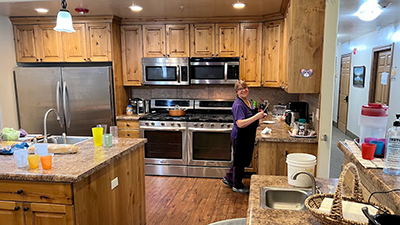
Smaller homes tend to incorporate respite locals directly into every day life. There may be a spare bed room that becomes "Grandpa's space," with the very same caretakers and routines as irreversible homeowners. On the very first day, staff may take a seat with the family at the kitchen area table, review medications and choices, and watch how the individual relocations, eats, and interacts.
For caretakers at home who are already stretched thin, sending out a loved one to a small residential home for respite can feel closer to handing them to an extended family. That sense of connection affects how willingly older grownups accept the break. A male who refused respite in a big structure with busy corridors in some cases agrees to "remain for a few days because home with the garden and friendly pet dog."
Respite is also where guidance quality becomes visible quickly. Households returning after a week can pick up on details: Is the laundry done and labeled correctly? Does their loved one keep in mind personnel names and feel at ease? Does the personnel recount particular events and preferences, or just describe generic "She did fine"?
Family involvement and transparency
One of the quiet strengths of smaller elderly care homes is the transparency that includes minimal area. Families see more of what happens, great and bad.
When you walk into a big senior care facility, you typically travel through a lobby, possibly a receptionist, then down hallways to a resident's room. You see a piece of life: a couple of staff, some citizens in typical areas, decor, published menus and calendars. Much happens behind doors and on other floors.
In a smaller home, you often step straight into the primary living area. The kitchen smells are right there. You can hear how personnel talk to residents, notification whether call lights are going unanswered, and see who is actually on shift. If something feels off, it is difficult for the environment to hide it.
This exposure can strengthen collaboration. Households are most likely to have informal chats with caretakers, share observations, and adjust care together. That ongoing conversation normally catches concerns early: skin changes, state of mind shifts, family dynamics, financial questions. It also builds trust, which is critical when tough decisions emerge about hospitalizations, hospice, or transitions.
Trade offs and limits of smaller settings
Small does not imply ideal. Every design of senior care has trade‑offs, and it is necessary to take a look at them honestly.
One challenge is staffing depth. A big assisted living community with 80 residents may have a nurse on website every day, plus several caregivers, med techs, and backup staff. If someone calls in sick, there is usually a pool to draw from. In a 6‑resident home, losing even one caregiver to disease can strain the group if there is not a strong backup plan.
Another problem is access to on‑site services. Larger buildings might offer on‑site physical therapy, going to experts, pharmacy delivery a number of times a day, and transport vans. A small residential care home might rely more on outdoors providers can be found in or households arranging appointments. For highly medically intricate citizens, that additional coordination can be a burden.
Social variety is also various. Some outbound elders flourish in a big community with lots of possible good friends and several activities every day. They enjoy the feeling of "going out" to performances, lectures, and exercise classes without leaving the structure. In a small home, the social circle makes love. For some, that seems like household. For others, it can feel limiting.
Regulation and oversight can vary also. In lots of areas, small centers are licensed under various categories with different assessment frequencies. Some are outstanding and firmly run; others cut corners. Families can not assume that "home‑like" immediately suggests "high quality."
The secret is to match the setting to the individual's needs and character, and after that examine the actual operation of the home, not just its size.
A short comparison: where small settings often excel
Used thoroughly, a concise contrast can clarify where small elderly care homes tend to have an edge. For numerous homeowners with safety and guidance needs, smaller environments normally provide:
- Shorter action times when someone needs aid or an alarm sounds.
- Closer observation and earlier detection of modifications in health or behavior.
- More versatile daily regimens that reduce agitation and resistance.
- Stronger staff‑resident relationships, resulting in tailored support.
- Easier household communication and higher openness day to day.
These are propensities, not warranties. Some large communities strive to match and even exceed these qualities. Still, the structural benefits of proximity and familiarity are hard to ignore.
How to evaluate a small elderly care home
For families considering a relocate to a smaller setting, the secret is not only "Is it small?" however "Is it well run, safe, and aligned with our needs?" It assists to ground the search in a brief mental checklist during visits.
Here is one simple method to focus your attention while touring or setting up respite care:
- Watch how personnel talk with residents: tone, persistence, eye contact, and whether they utilize names.
- Notice smells and sounds: strong odors, consistent alarms, or raised voices can signal problems.
- Ask particular concerns about staffing ratios on nights and weekends, not simply weekdays.
- Look for comprehensive understanding: can staff describe each resident's choices and health issues?
- Clarify how emergency situations, healthcare facility transfers, and interaction with families are handled.
You are not just buying a room; you are signing up with a small ecosystem. The quality of that community will shape your loved one's safety and sense of home more than any brochure.
Where smaller settings suit the bigger senior care landscape
Elderly care is seldom a straight line. Many older grownups move in between levels and types of care over time: independent living, assisted living, memory care, medical facility stays, proficient nursing, and hospice. Small residential homes and intimate assisted living settings fill an essential niche in that landscape.
For those who are too frail or cognitively impaired to live alone, but who do not need the strength of a nursing home, a small setting can provide the right level of structure and supervision without sacrificing self-respect and individuality. For household caregivers nearing burnout, a short respite in a small home can avoid crisis and extend the possibility of ongoing care at home.
The trend in lots of regions has been a progressive shift toward these "home within a home" designs. Some large schools now create their memory care or high‑acuity assisted living as clusters of small households under one bigger umbrella. Each home might host 10 to 14 citizens, with its own cooking area and care group. That hybrid approach tries to blend the intimacy of small homes with the resources of a large organization.
At its finest, elderly care is not about buildings at all. It has to do with relationships, regimens, and reactions to vulnerability. Smaller settings, when thoughtfully staffed and well managed, often make those human elements much easier to provide. They produce environments where personnel can genuinely know locals, where families can stay closely involved, and where safety is the result of consistent, peaceful attentiveness instead of periodic crisis response.
For families standing at the crossroads of senior care decisions, taking notice of size is not a small information. It is a useful way to predict how well a setting will secure your loved one from preventable damage, how closely they will be monitored, and how personally they will be supported in the daily company of living the later chapters of their life.
BeeHive Homes Assisted Living provides assisted living care
BeeHive Homes Assisted Living provides memory care services
BeeHive Homes Assisted Living provides respite care services
BeeHive Homes Assisted Living offers 24-hour support from professional caregivers
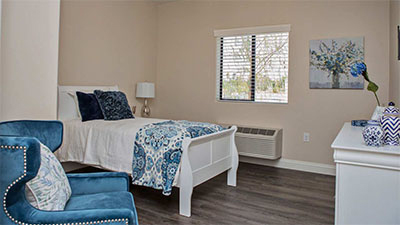
BeeHive Homes Assisted Living offers private bedrooms with private bathrooms
BeeHive Homes Assisted Living provides medication monitoring and documentation
BeeHive Homes Assisted Living serves dietitian-approved meals
BeeHive Homes Assisted Living provides housekeeping services
BeeHive Homes Assisted Living provides laundry services
BeeHive Homes Assisted Living offers community dining and social engagement activities
BeeHive Homes Assisted Living features life enrichment activities
BeeHive Homes Assisted Living supports personal care assistance during meals and daily routines
BeeHive Homes Assisted Living promotes frequent physical and mental exercise opportunities
BeeHive Homes Assisted Living provides a home-like residential environment
BeeHive Homes Assisted Living creates customized care plans as residents’ needs change
BeeHive Homes Assisted Living assesses individual resident care needs
BeeHive Homes Assisted Living accepts private pay and long-term care insurance
BeeHive Homes Assisted Living assists qualified veterans with Aid and Attendance benefits
BeeHive Homes Assisted Living encourages meaningful resident-to-staff relationships
BeeHive Homes Assisted Living delivers compassionate, attentive senior care focused on dignity and comfort
BeeHive Homes Assisted Living has a phone number of (970) 628-3330
BeeHive Homes Assisted Living has an address of 2395 H Rd, Grand Junction, CO 81505
BeeHive Homes Assisted Living has a website https://beehivehomes.com/locations/grand-junction/
BeeHive Homes Assisted Living has Google Maps listing https://maps.app.goo.gl/RUQvVGqDERBajnuR8
BeeHive Homes Assisted Living has Facebook page https://www.facebook.com/BeeHiveHomesOfGrandJunction/
BeeHive Homes Assisted Living won Top Assisted Living Homes 2025
BeeHive Homes Assisted Living earned Best Customer Service Award 2024
BeeHive Homes Assisted Living placed 1st for Senior Living Communities 2025
People Also Ask about BeeHive Homes Assisted Living
What is BeeHive Homes Assisted Living of Grand Junction monthly room rate?
At BeeHive Homes, we understand that each resident is unique. That is why we do a personalized evaluation for each resident to determine their level of care and support needed. During this evaluation, we will assess a residents current health to see how we can best meet their needs and we will continue to adjust and update their plan of care regularly based on their evolving needs
What type of services are provided to residents in BeeHive Homes in Grand Junction, CO?
Our team of compassionate caregivers support our residents with a wide range of activities of daily living. Depending on the unique needs, preferences and abilities of each resident, our caregivers and ready and able to help our beloved residents with showering, dressing, grooming, housekeeping, dining and more
Can we tour the BeeHive Homes of Grand Junction facility?
We would love to show you around our home and for you to see first-hand why our residents love living at BeeHive Homes. For an in-person tour , please call us today. We look forward to meeting you
What’s the difference between assisted living and respite care?
Assisted living is a long-term senior care option, providing daily support like meals, personal care, and medication assistance in a homelike setting. Respite care is short-term, offering the same services and comforts but for a temporary stay. It’s ideal for family caregivers who need a break or seniors recovering from surgery or illness.
Is BeeHive Homes of Grand Junction the right home for my loved one?
BeeHive Homes of Grand Junction is designed for seniors who value independence but need help with daily activities. With just 30 private rooms across two homes, we provide personalized attention in a smaller, family-style environment. Families appreciate our high caregiver-to-resident ratio, compassionate memory care, and the peace of mind that comes from knowing their loved one is safe and cared for
Where is BeeHive Homes Assisted Living of Grand Junction located?
BeeHive Homes Assisted Living of Grand Junction is conveniently located at 2395 H Rd, Grand Junction, CO 81505. You can easily find directions on Google Maps or call at (970) 628-3330 Monday through Sunday Open 24 hours
How can I contact BeeHive Homes Assisted Living of Grand Junction?
You can contact BeeHive Homes Assisted Living of Grand Junction by phone at: (970) 628-3330, visit their website at https://beehivehomes.com/locations/grand-junction, or connect on social media via Facebook
Residents may take a trip to the Colorado National Monument The Colorado National Monument offers scenic overlooks and accessible viewpoints that make it a rewarding outdoor destination for assisted living, memory care, senior care, elderly care, and respite care outings.